
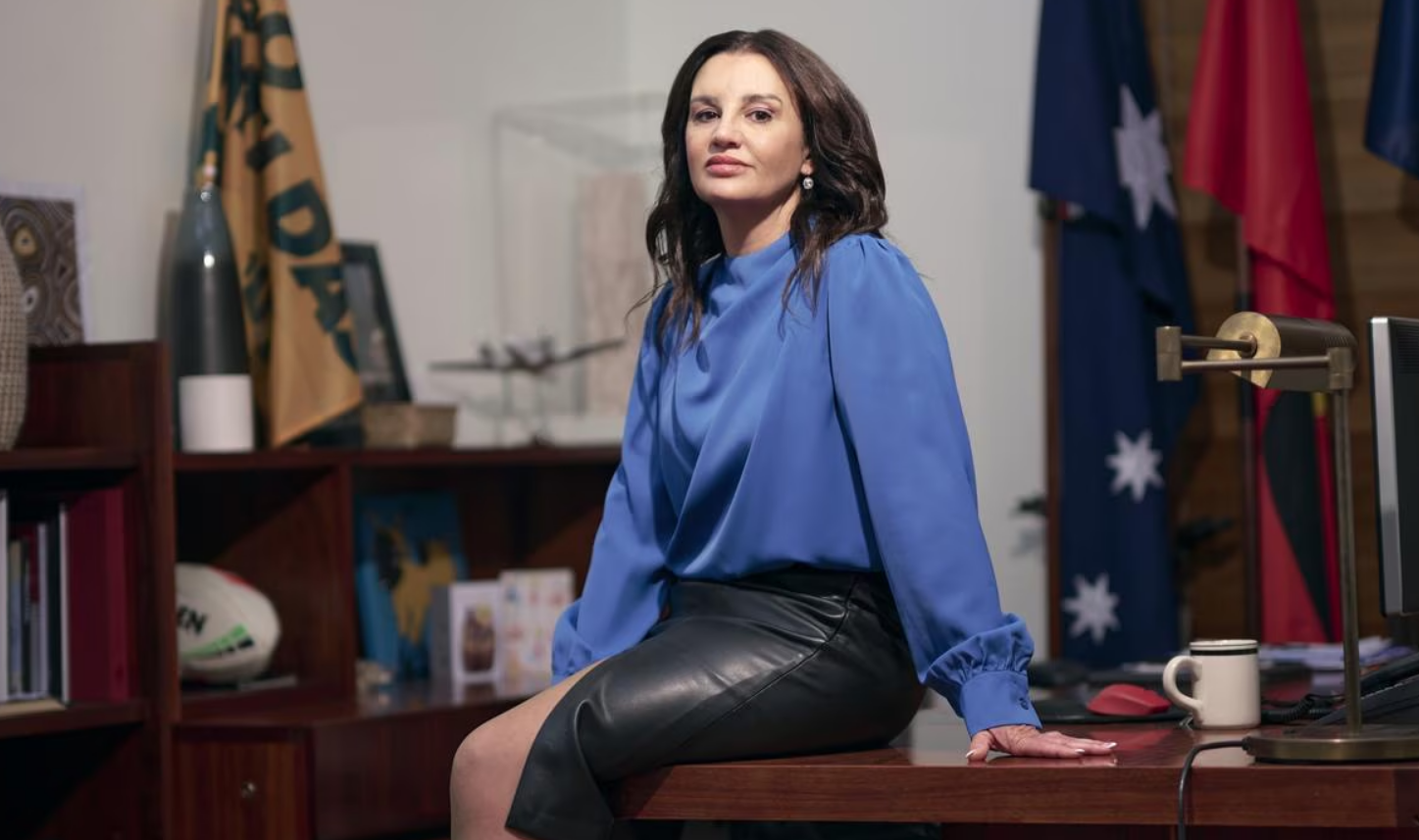
Few political figures in Australia have developed a public image as distinctive, unpredictable, and emotionally direct as Jacqui Lambie. Over the years, Lambie has transformed herself from a controversial outsider into one of the country’s most recognizable independent political voices. Blunt, passionate, and unapologetically unconventional, she built her reputation not through polished political branding, but through authenticity and relentless advocacy for ordinary Australians, particularly veterans and working-class communities.
In a political culture often criticized for scripted messaging and carefully managed public appearances, Lambie’s raw communication style immediately set her apart. Supporters admire her honesty and refusal to speak like a career politician. Critics sometimes view her as erratic or overly confrontational. Yet even opponents frequently acknowledge that Jacqui Lambie brings a level of emotional sincerity rarely seen in modern politics.
Born in Tasmania, Lambie’s background differed significantly from many traditional political elites. Before entering public life, she served in the Australian Army, an experience that profoundly shaped her worldview and political priorities. Military service became central not only to her identity, but also to many of the causes she later championed.
After leaving the military due to injury, Lambie experienced financial hardship and personal struggles, including battles involving healthcare, welfare systems, and economic insecurity. These experiences strongly influenced her political rhetoric. Rather than speaking abstractly about policy, she often frames issues through personal stories and lived experience.
Her rise to national prominence began through populist politics, initially associated with movements challenging established political institutions. However, Lambie gradually evolved into a more independent and difficult-to-classify figure. While she retained strong populist instincts, her positions often crossed traditional ideological boundaries.
One of the defining features of Lambie’s political career has been her advocacy for military veterans. She repeatedly criticized governments of different political parties for failing to provide adequate mental health support, healthcare access, and financial assistance for former service members. Her emotional speeches on veteran suicide and institutional neglect attracted widespread attention and sympathy.
Unlike politicians who rely heavily on technical language, Lambie communicates in direct, emotionally charged terms. She frequently uses humor, frustration, anger, and personal anecdotes to connect with audiences. This communication style resonates strongly with voters who feel disconnected from highly polished political elites.
Her political identity is also deeply tied to Tasmania and regional Australia more broadly. Lambie often speaks about economic inequality between urban centers and smaller communities, arguing that political systems disproportionately favor wealthy metropolitan interests. This regional focus helped her build loyalty among voters who felt ignored by mainstream parties.
One reason Jacqui Lambie remains politically significant is her unpredictability. She does not fit neatly into conventional ideological categories. On some issues, she aligns with conservative populism. On others, she supports policies associated with social welfare or progressive economic intervention. This flexibility allows her to appeal to voters frustrated by rigid party politics.
At the same time, her independent style creates tension within parliamentary systems built around party discipline and strategic consistency. Lambie often prioritizes instinct, personal conviction, and constituency concerns over ideological purity or partisan loyalty. Supporters see this as evidence of authenticity, while critics argue it can produce inconsistency.
Media coverage of Lambie frequently focuses on her personality as much as her policies. Her blunt interviews, emotional speeches, and unscripted remarks generate headlines in ways that more conventional politicians rarely do. Yet beneath the media spectacle lies a politician deeply focused on economic insecurity, healthcare access, veterans’ welfare, and social inequality.
Lambie’s popularity also reflects broader global trends involving distrust of traditional political institutions. Across many democracies, voters increasingly gravitate toward figures perceived as authentic outsiders rather than polished establishment professionals. Lambie’s career fits within this larger transformation of democratic politics.
However, unlike some populist figures who focus primarily on cultural conflict, Lambie often centers economic hardship and institutional neglect. She repeatedly speaks about the experiences of people living paycheck to paycheck, struggling with healthcare systems, or feeling abandoned by political leaders.
Her role in Australia’s Senate has made her politically influential beyond the size of her electoral base. In parliamentary systems where governments sometimes lack overwhelming majorities, independent senators can hold significant negotiating power. Lambie has frequently used this position to pressure governments and demand policy concessions.
Critics argue that her unpredictability complicates stable governance or creates political uncertainty. Others question whether highly personalized politics can effectively produce long-term structural reform. Yet her supporters counter that traditional political systems have often failed ordinary citizens precisely because they became too institutionalized and disconnected from real-world struggles.
Another important aspect of Lambie’s appeal is vulnerability. Unlike politicians who carefully avoid discussing personal hardship, she openly references her own difficulties with finances, mental health challenges within veteran communities, and broader struggles facing working-class Australians. This openness creates a sense of relatability that many voters find powerful.
As Australian politics continues evolving, figures like Jacqui Lambie demonstrate how public expectations of leadership are changing. Voters increasingly seek authenticity, emotional honesty, and direct communication rather than perfectly rehearsed political performance.
Whether viewed as a courageous independent voice or an unpredictable populist force, Jacqui Lambie has carved out a unique place in Australia’s political landscape. Her career challenges assumptions about who can succeed in politics and how political authority is built in the modern media era.
In many ways, Lambie represents frustration transformed into political energy — frustration with bureaucracy, inequality, elitism, and institutional indifference. That emotional connection with voters ensures that her influence extends far beyond parliamentary procedure alone, making her one of the most fascinating and unconventional figures in contemporary Australian politics.
